
Blue Sapphire Buying Guide: 4Cs, Origins & Certification
By VJ Jewellers Ltd — every gemstone independently certified before it reaches our display case.
Quick answer: a genuine, well-chosen Blue Sapphire comes down to four things — cornflower-to-royal blue color, eye-clean clarity, a cut that maximizes brilliance, and a lab certificate (GIA, GRS, or IGI) confirming it's natural and disclosing any treatment. Skip any of these and you're buying on trust alone.
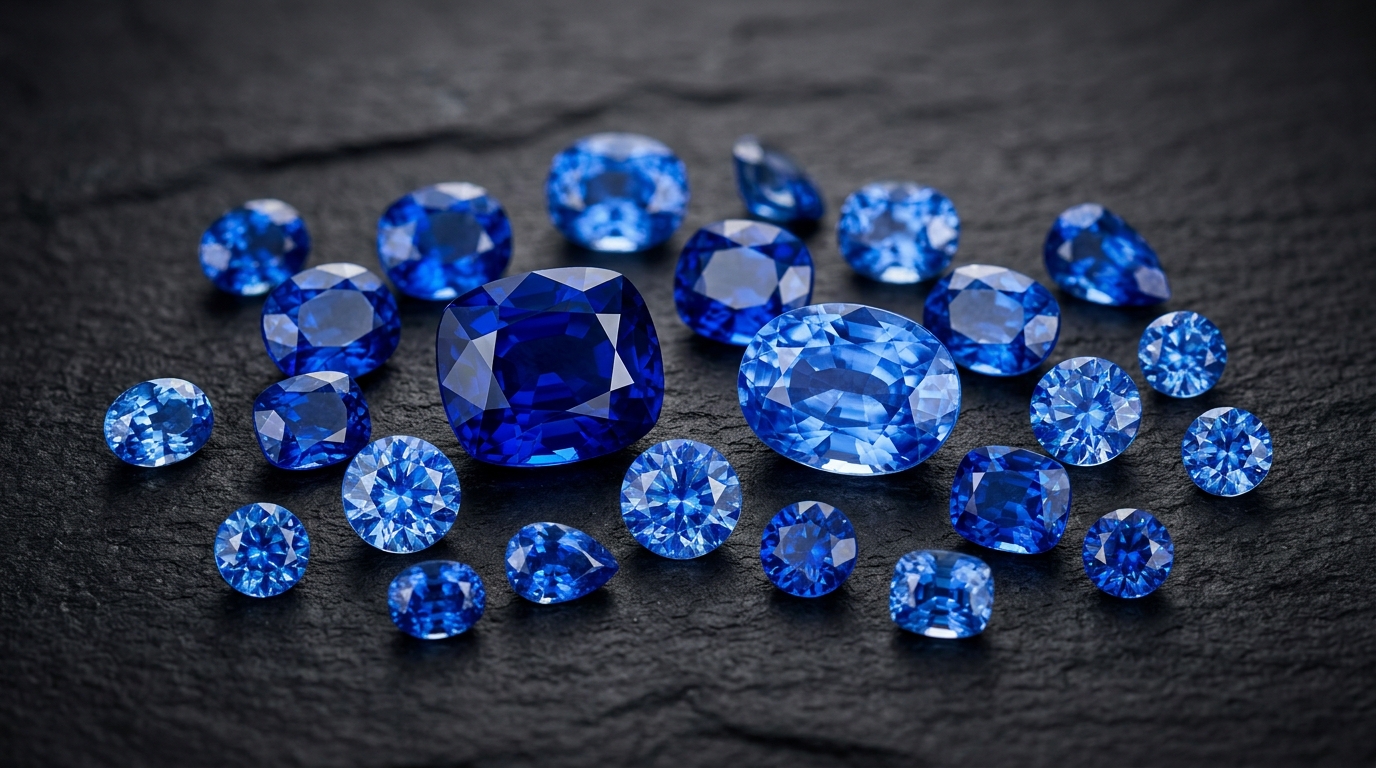
The 4Cs of Blue Sapphire
Color — the biggest value driver
The most prized hues run from vivid cornflower blue to intense royal blue. Avoid stones with heavy gray or blackish-green undertones. Tone should be medium to medium-dark — too dark and the stone loses its internal fire; too pale and it lacks impact.
Clarity — eye-clean is the standard
Natural sapphires almost always contain some internal features (fine silk, color banding, small crystals) from how they form under tectonic pressure. For an astrological or investment-grade stone, look for eye-clean — no inclusions visible without magnification — and avoid surface-reaching fractures or large opaque patches.
Cut — controls brilliance
A well-proportioned cut stops light from leaking out the back of the stone ("windowing") and maximizes the blue brilliance you actually see. Ovals, cushions, and rounds are standard; emerald cuts highlight transparency.
Carat — sized to purpose
For astrological wear, the traditional guideline is roughly 1 carat per 12kg of body weight, matching the stone's energetic mass to the wearer. For fashion jewellery, carat is simply a matter of preference and budget.
Where Your Sapphire Comes From
| Origin | Known For |
|---|---|
| Kashmir (India) | The historic gold standard — velvety blue from microscopic rutile inclusions. Extremely rare, museum/auction-tier pricing. |
| Sri Lanka (Ceylon) | Vibrant cornflower-to-royal blue with high transparency — the premier choice for both jewellery and astrological use. |
| Myanmar (Burma) | Deep, saturated royal blue that holds its color even under artificial light. |
| Madagascar | Increasingly rivals Ceylon and Burma in clarity and brilliance at more accessible price points. |
| Thailand / Australia | Often darker, inkier, or greenish-blue tones — durable, but less preferred for astrological use due to lower light transmission. |
Heated vs. Unheated — What You're Actually Paying For
Heat treatment is a long-standing, widely accepted industry practice that dissolves dark inclusions and intensifies color. It's normal in commercial jewellery, but traditional Vedic practitioners generally prefer unheated stones to keep the gem's natural cosmic properties, as they see it, unaltered.
Diffusion and glass-filling are a different matter entirely — these treatments significantly alter low-quality corundum to mimic higher grades, sharply reduce resale value, and are not considered valid substitutes for astrological purposes. A reputable seller will always disclose which category your stone falls into.
Certification: Don't Buy on a Verbal Promise
Insist on a certificate from an independent, internationally recognized lab:
- GIA (Gemological Institute of America)
- GRS (GemResearch Swisslab)
- IGI (International Gemological Institute)
The certificate should explicitly state the stone is Natural, list the exact Carat Weight, and disclose Treatment Status (Unheated or Heated). If a seller can't produce this, treat that as a red flag regardless of how confident the sales pitch sounds.
Budget-Friendly Alternatives (Uparatnas)
If a fine, unheated natural Blue Sapphire is out of budget, Vedic tradition recognizes substitute stones believed to channel similar Saturnian energy:
- Iolite (Neeli) — often called "Water Sapphire," a violet-blue pleochroic gem
- Amethyst (Katela) — purple-to-violet quartz
- Blue Topaz — bright blue and budget-friendly
Caring for Your Stone
Blue Sapphire is a 9 on the Mohs hardness scale — second only to diamond — making it well-suited to daily wear. Clean with warm water and mild dish soap, avoid harsh chemicals and chlorine, and store separately from diamonds to prevent scratching.